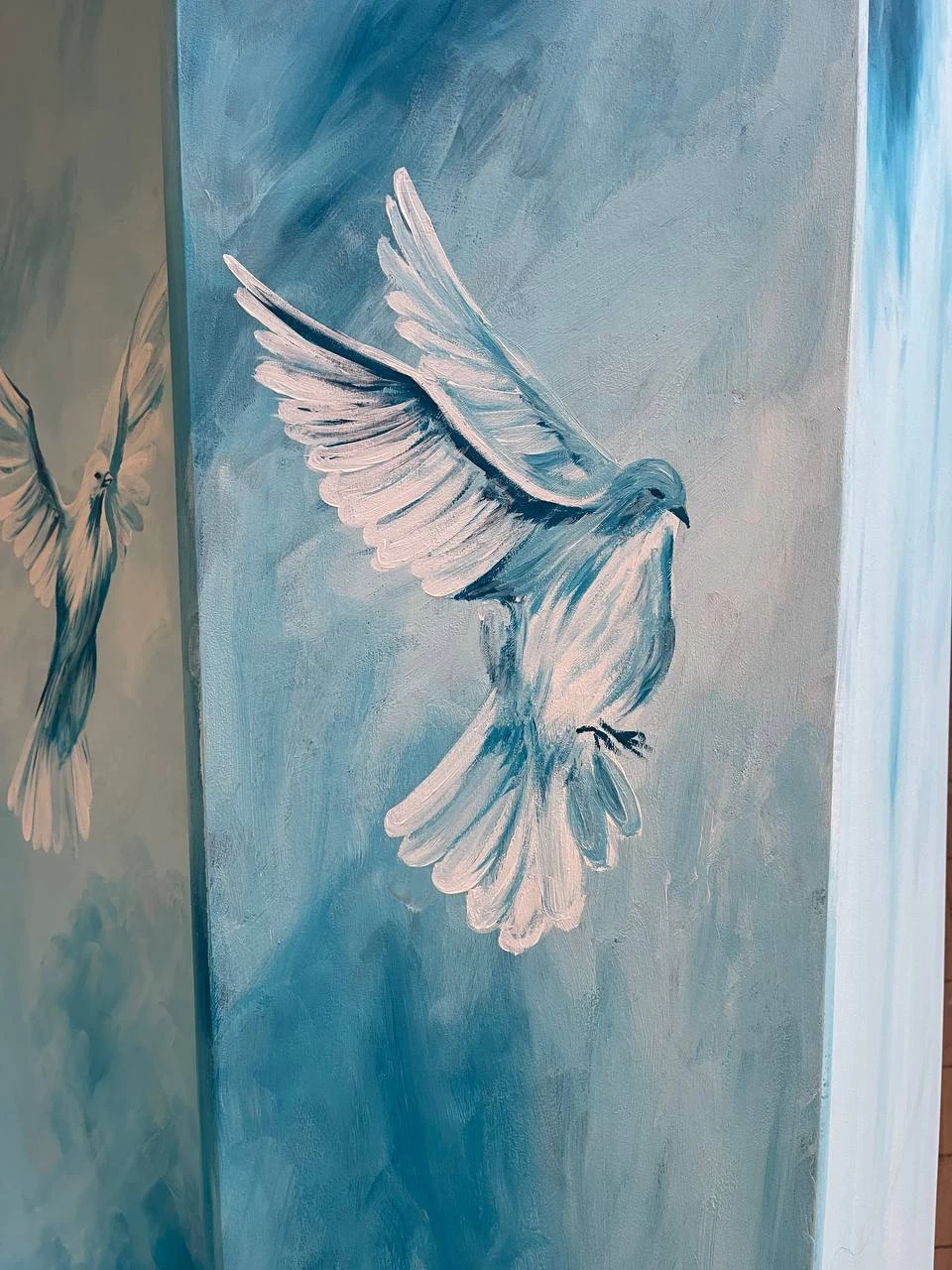
In a difficult moment, the question may seem too broad on the motive. It helps to break it down into small steps. The goal is not to summarize the whole life on one surface. The goal is to find an image that reminds him truthfully and clearly.
1. Start with what is repeated in the memories
Each of the relatives can say one sentence: where the person liked to be the most, what color he often wore, what he grew, where he returned or what object he always had with him. Write the answers without grading. A motif that appears more than once is usually a good starting point.
2. Select one main image
The main image can be a tree, meadow, bird, mountain silhouette or flower. Other memories may remain in the details. When all symbols are equally prominent, the result can appear fragmented. On the contrary, one clear dominant allows other elements to quietly complement it.
3. Choose colors according to the person, not according to habit
Color doesn't have to be flashy to be personal. Some belong to deep blue, others to soft sage, burgundy or warm yellow. A favorite sweater, room, painting or garden can help. The color palette can then be adjusted to look dignified and at the same time remain true.
The best basis for a proposal is not a long list of symbols, but a few concrete sentences about a person.
4. Bring photos as inspiration, not as a template to copy
A family photo can show the true shade of a flower, the shape of a cottage or a favorite landscape. The artistic design selects the essentials from it and adapts the composition to the shape of the coffin. Before painting itself, it is important to agree on the layout of the motif, the color and the level of detail.
5. Leave room for silence as well
Empty space is not unused space. It gives peace to the main motif and allows the whole to appear light. If the family is unsure, it is safer to start with a simple composition and add only what has a clear meaning.