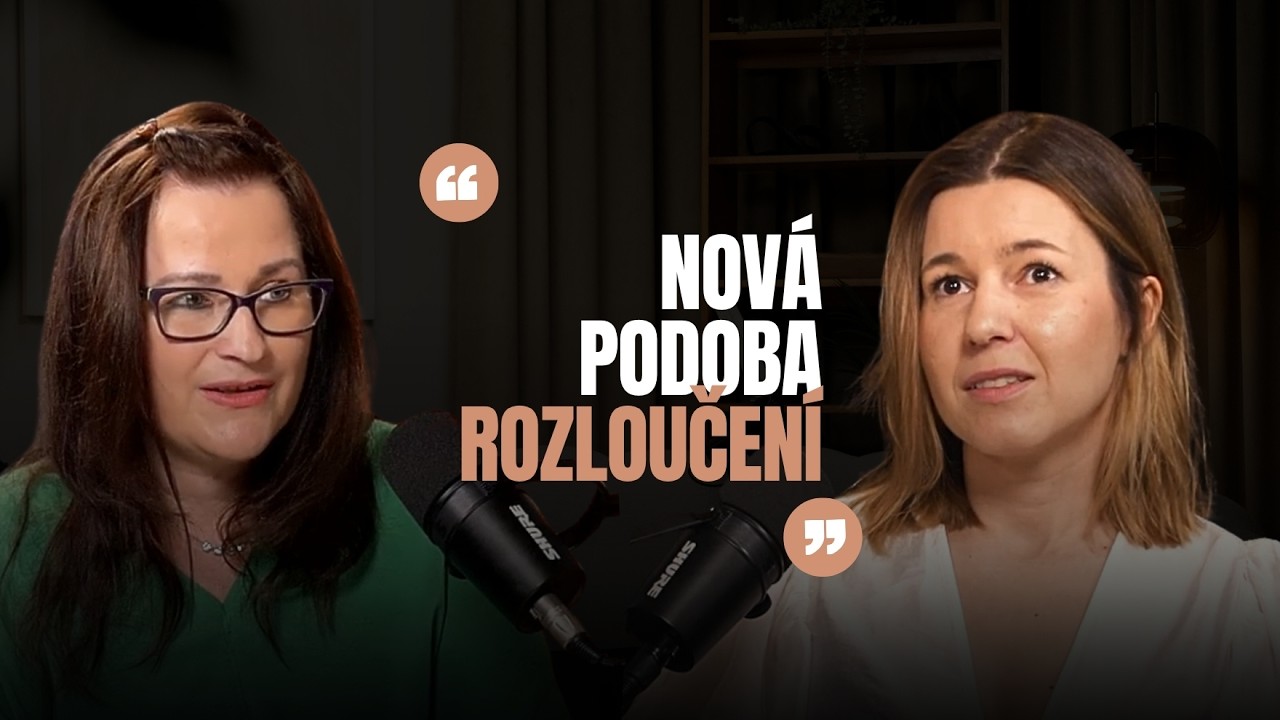
The Memoirs Podcast
Video provided by YouTube. It will only load after you click; we don't connect to YouTube until then.
We often know the last farewell in a form that is dark, formal and distant from ordinary life. A painted coffin offers a different option: it does not deny sadness or finitude, but alongside them lets the colors, places, flowers and small symbols that were really close to a person resonate.
From clipboard to personal story
Mirka describes in the interview that the first motifs began to attract families with specific memories. Someone remembered favorite flowers, others birds, landscape, pet or color that accompanied a person. Thus, the coffin does not become a mere decoration. It can carry the symbolism of life and the relationship that remains after a person.
Each painting is created by hand and must respect the three-dimensional shape, wood and structural details. The motif is therefore not composed as a painting on a flat canvas. It runs across the lid and side walls so that it appears as one unit from different angles.
"The painted coffin is a manifesto of not being afraid to approach the coffin."
A color that does not cover sadness
The point is not to beautify or hide death. Color can bring a familiar image to the ceremony and remind you of who you were. A delicate meadow, a blue print, a blossoming branch or birds in the sky can evoke a different memory than an anonymous surface without a personal relationship.
The process itself can be just as important. The family can choose a motif together, add a message or participate in painting by agreement. For some it is a silent ritual, for others a practical way to do something concrete in a difficult moment.
Farewell closer to life
The podcast also opens up the broader question of why we have pushed death out of homes and everyday conversations. Mirka remembers the village environment, where saying goodbye used to be a natural part of family and neighborhood life. The project does not follow this closeness by returning to all old habits, but by searching for a contemporary and sensitive language.
A personal farewell does not have to be expressive. Sometimes a single shade, flower or small symbol is enough. It is important that it is created with respect and that it corresponds to the person whose life it commemorates.