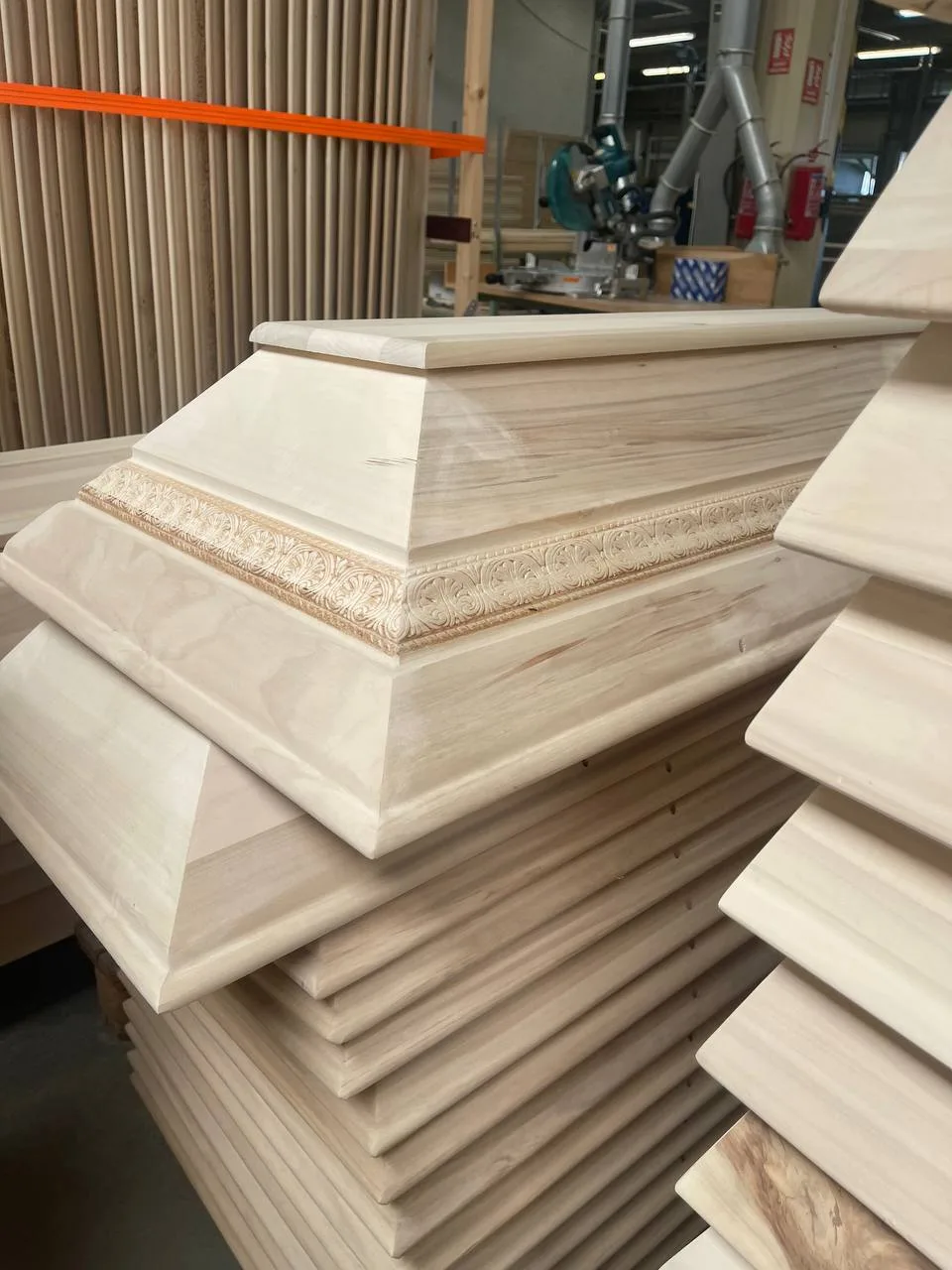
Before I start painting a coffin, I ask myself one question: what lies beneath the paint? A painted coffin is not a print that covers anything. It is a collaboration with the material — and that material has to stand its ground. That is why we work with Moser Legno, a maker whose coffins I went to see with my own eyes in Pelhřimov.
All wood, not just “wooden”
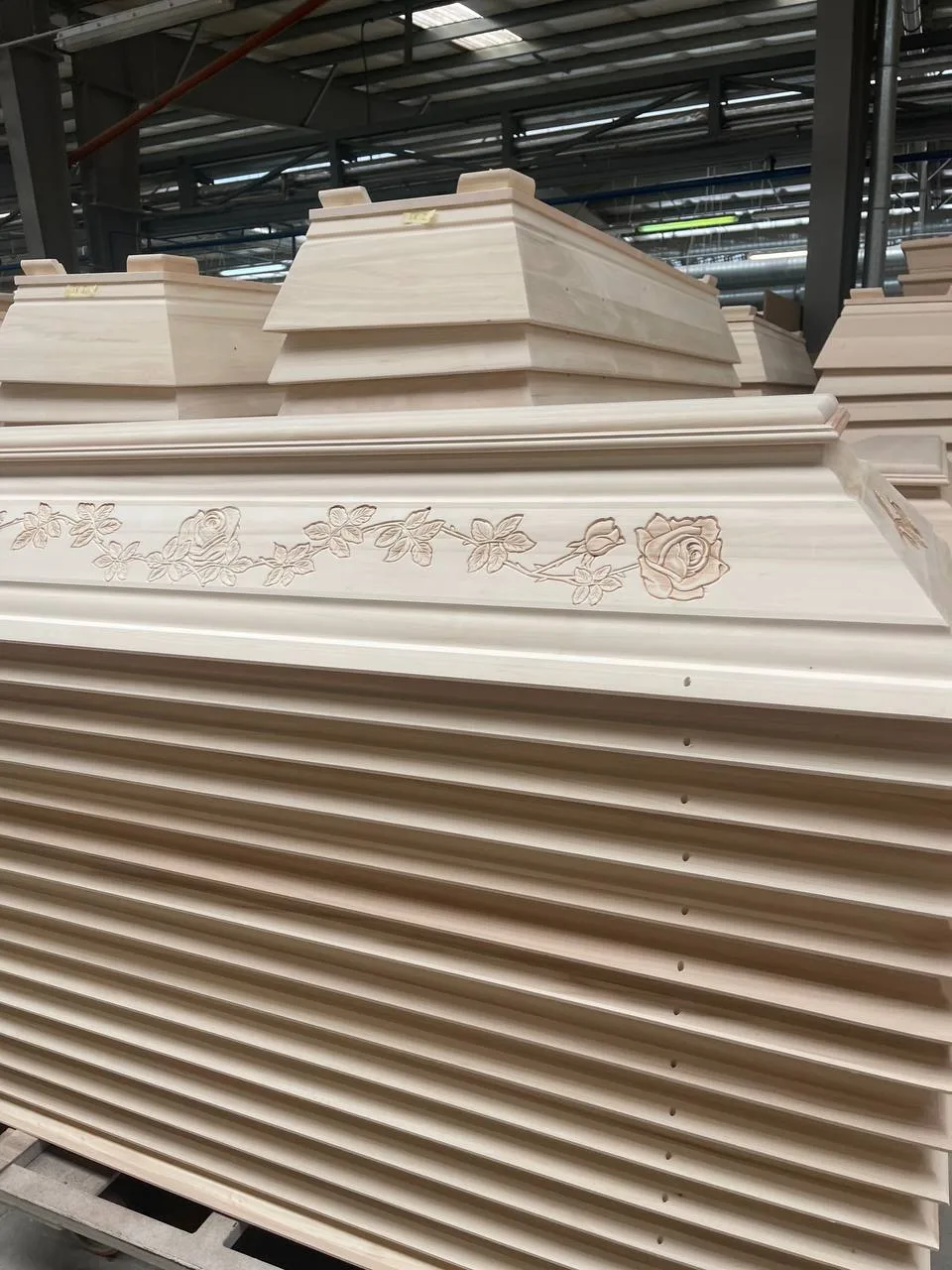
The market today often offers coffins made of OSB boards, plywood and chipboard substitutes that merely look like wood. At Moser Legno I saw the opposite: poplar, pine and oak glue-laminated boards, real solid wood that is cut, shaped, carved and lacquered in their own production. Nothing here is replaced with a cheaper board. The coffin is made entirely of wood — from the lid down to the little feet.
Carpentry precision that matters
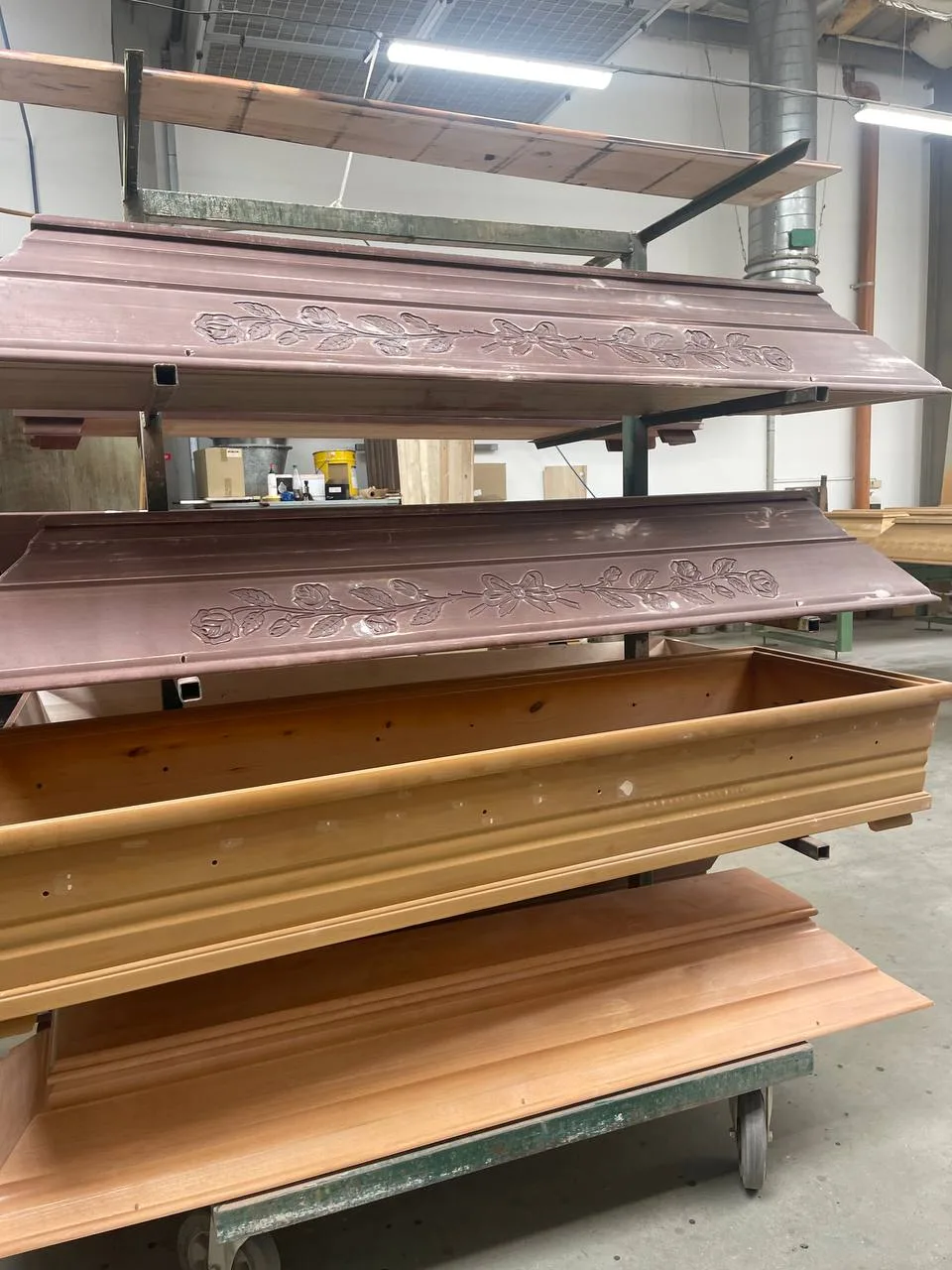
The company follows the craft that Sepp Moser began in 1957 in Bischofshofen, Austria; today it manufactures in Pelhřimov. I saw halls full of semi-finished coffins, deep rose carvings on the sides of lids, and the finishing shop where every coffin receives a natural, stained, patinated or glazed surface. Environmentally friendly paints are used for finishing.
Why this matters for painting
Paint and wood speak to each other. On solid wood the brush behaves livelier, the surface breathes and the painting settles in. On chipboard or OSB the same painting would look like foil — and I would know there is nothing honest beneath the flowers. A family choosing a painted coffin deserves to know that under the motif there is craftsmanship, not scenery.
I paint on wood that would stand on its own. That is the only fair option for me.
What this means for you
We work with Moser Legno — the coffins we paint on come from their production. If you are considering a painted coffin, you can rely on bases from a manufacturer with a quality certificate, membership in the Czech funeral association and their own production including custom sizes. This is not a marketing substitute — it is wood I have inspected, touched and love to paint on.